This post may contain affiliate links. As an Amazon Associate, I may earn from qualifying purchases.
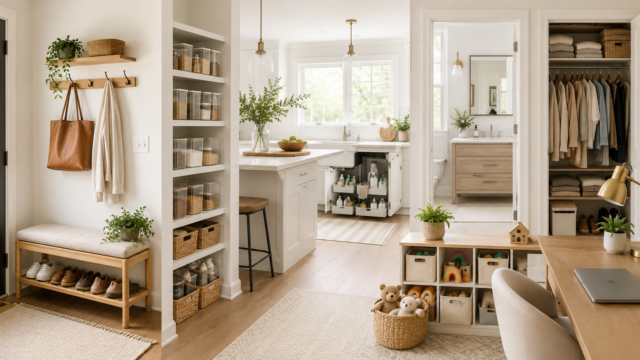
The photos in this post are styled inspiration images. The exact products linked below may look different, but they can help you create a similar organized and welcoming entryway.
A small entryway can quickly become crowded with shoes, coats, bags, keys, mail, and everyday family essentials. When everyone is rushing in and out of the house, even a narrow hallway can turn into a cluttered drop zone.
The good news is that you do not need a large mudroom or built-in storage to create a functional entrance. A few thoughtfully chosen organizers can make everyday routines easier while keeping the space warm, tidy, and welcoming.
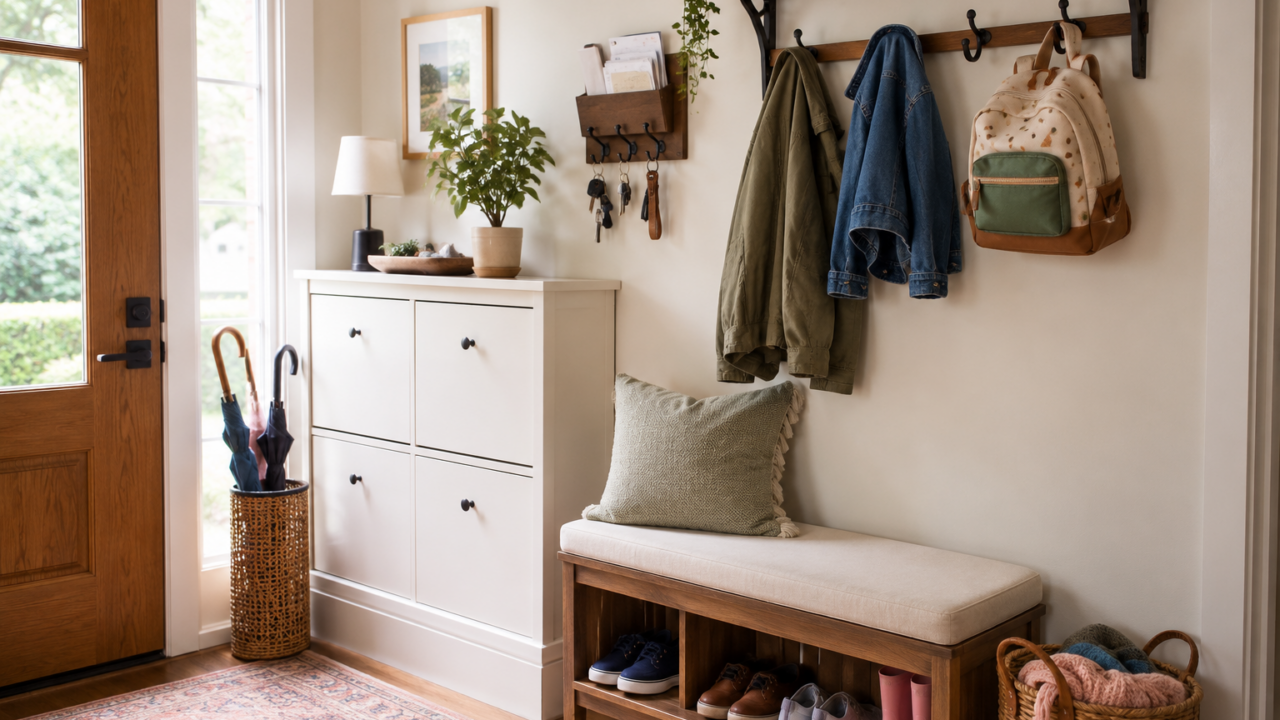
These small entryway organization ideas for busy families focus on practical storage that fits into compact spaces and helps every item find a home.
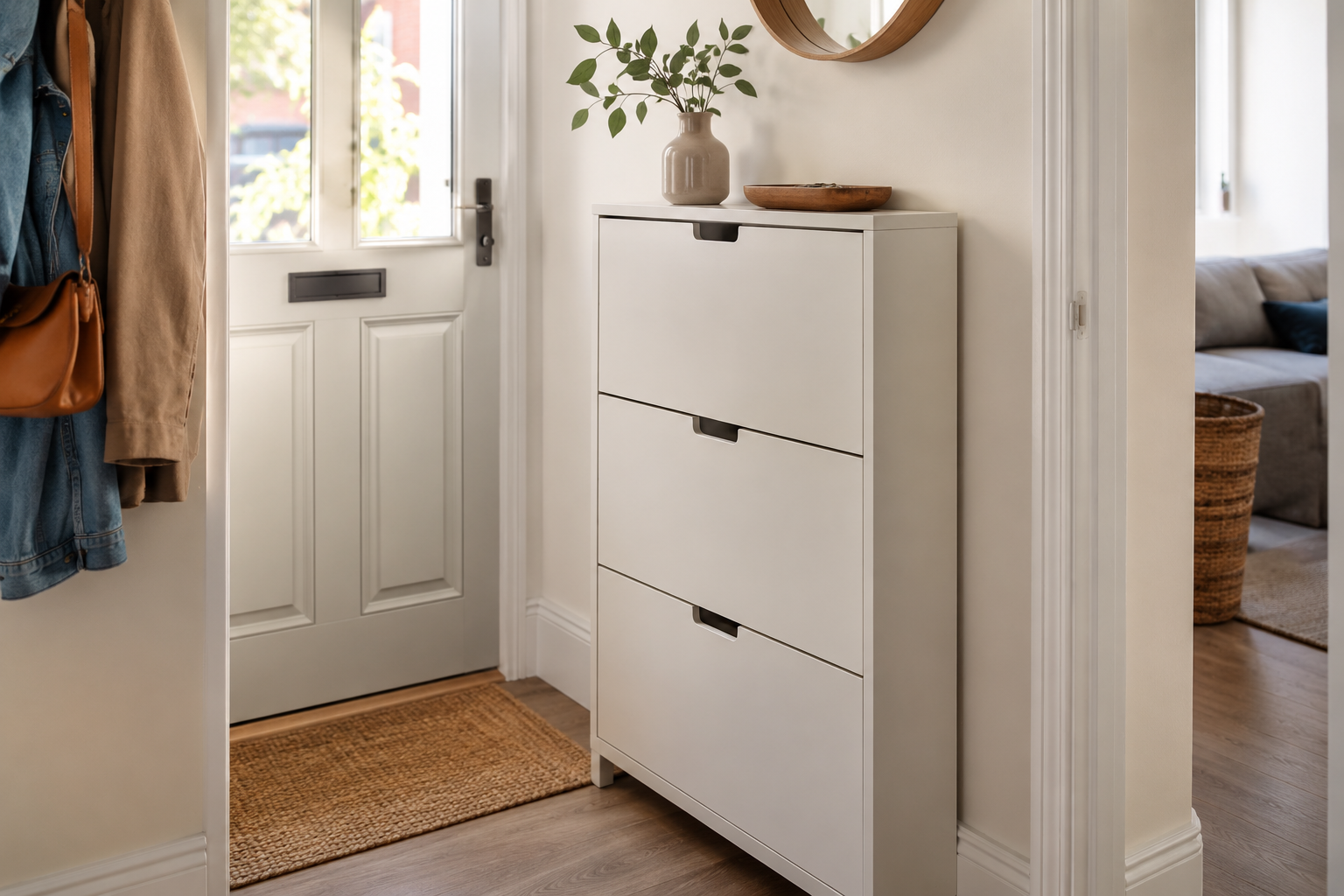
1. Hide Everyday Shoes Inside a Slim Cabinet
Shoes are often the first source of clutter in a small entryway. A slim shoe cabinet keeps everyday pairs close to the door while hiding them behind closed fronts.
Look for a narrow cabinet with flip-down compartments or shallow drawers. This style uses less floor space than a traditional shoe rack and creates a cleaner, calmer look.
The top of the cabinet can also become a useful landing area for a small tray, vase, or decorative bowl. Keeping the surface simple will prevent it from becoming another clutter zone.
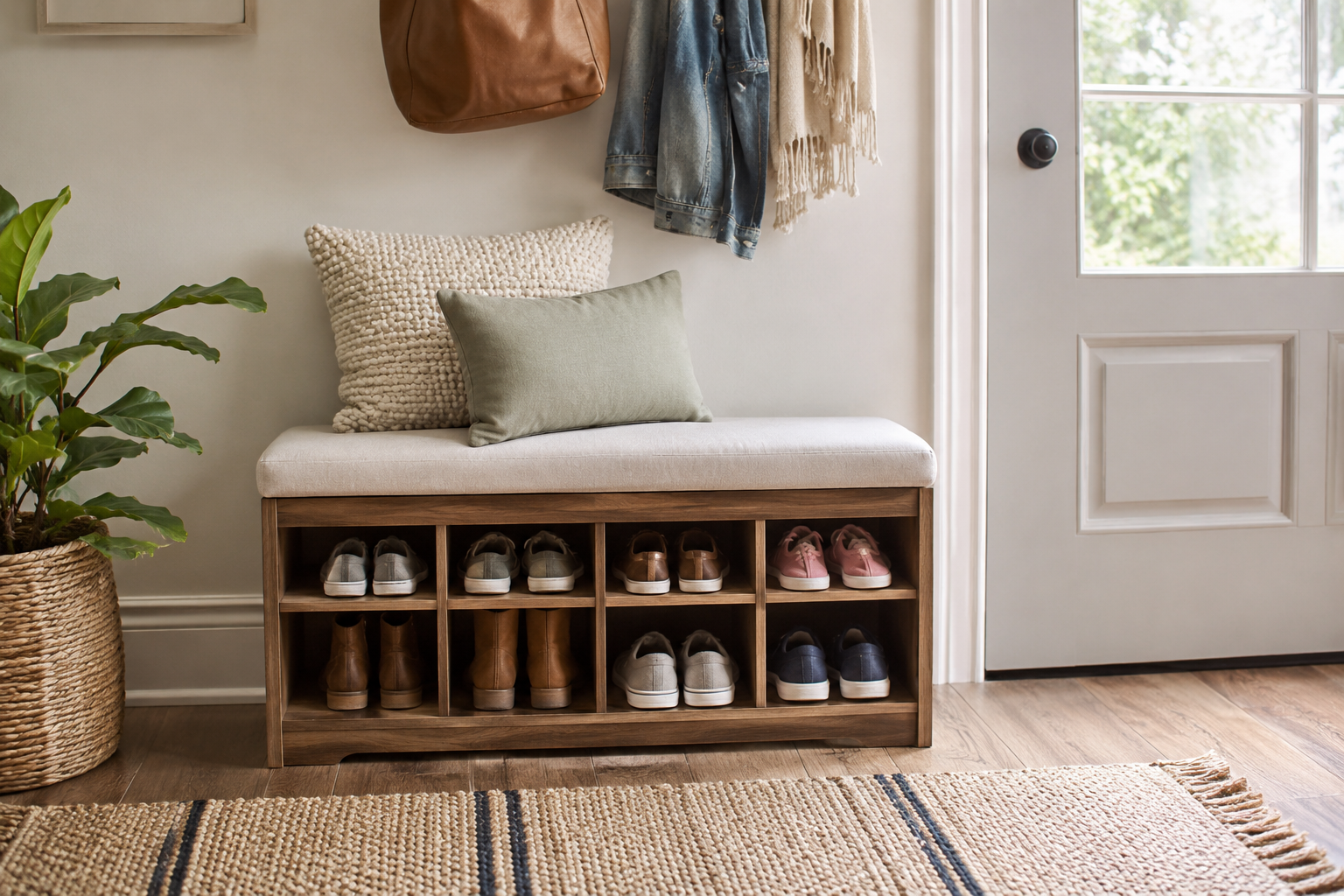
2. Add a Storage Bench for Easier Mornings
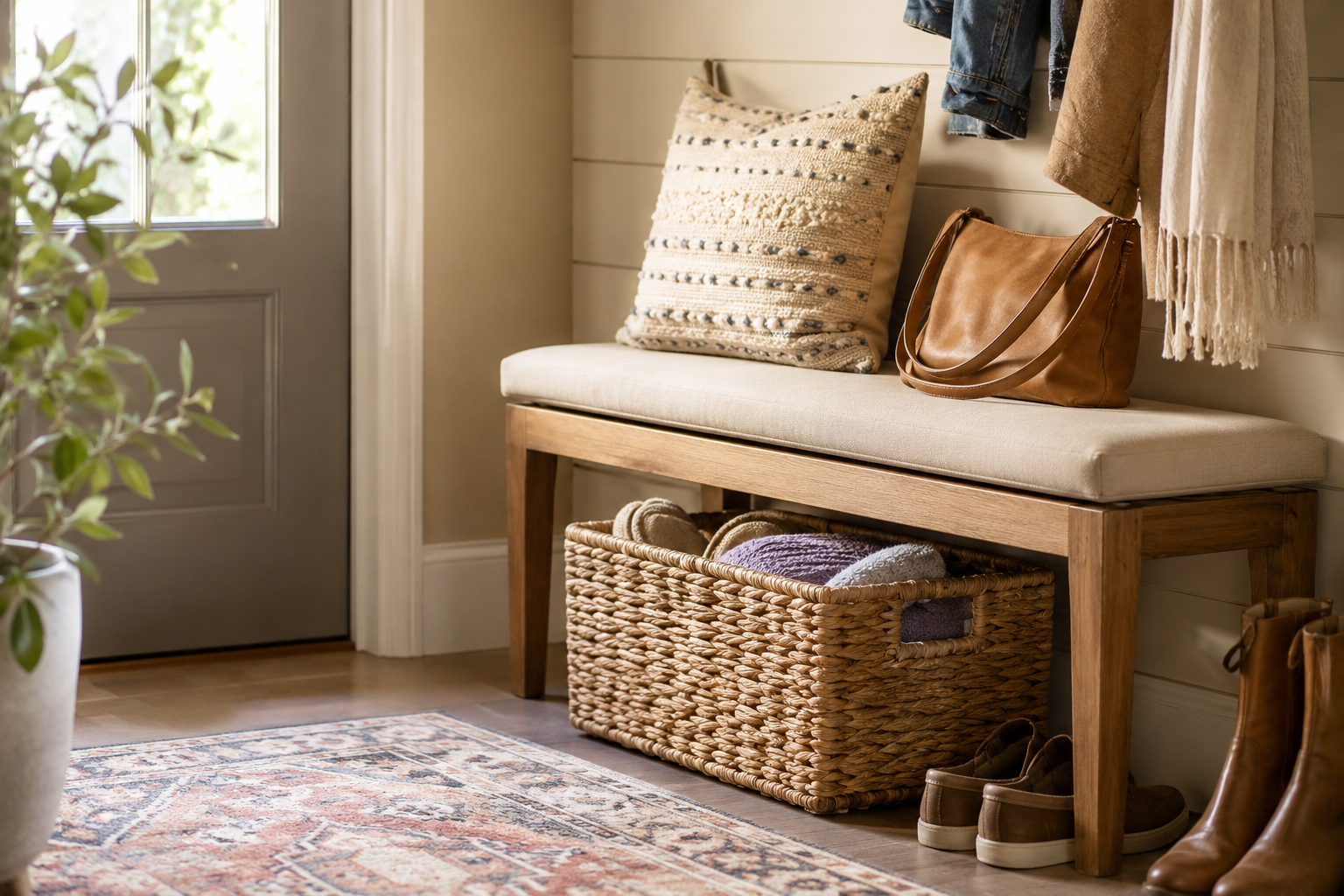
An entryway bench gives family members a comfortable place to put on and remove shoes. It can also provide valuable storage underneath the seat.
Choose a bench with open shoe cubbies, shelves, or space for baskets. Open storage works especially well for shoes that are worn every day because everyone can see where they belong.
A simple cushion and one washable pillow can make the space feel more inviting without adding too much decoration.
3. Use Wall Space for Coats, Hats, and Bags
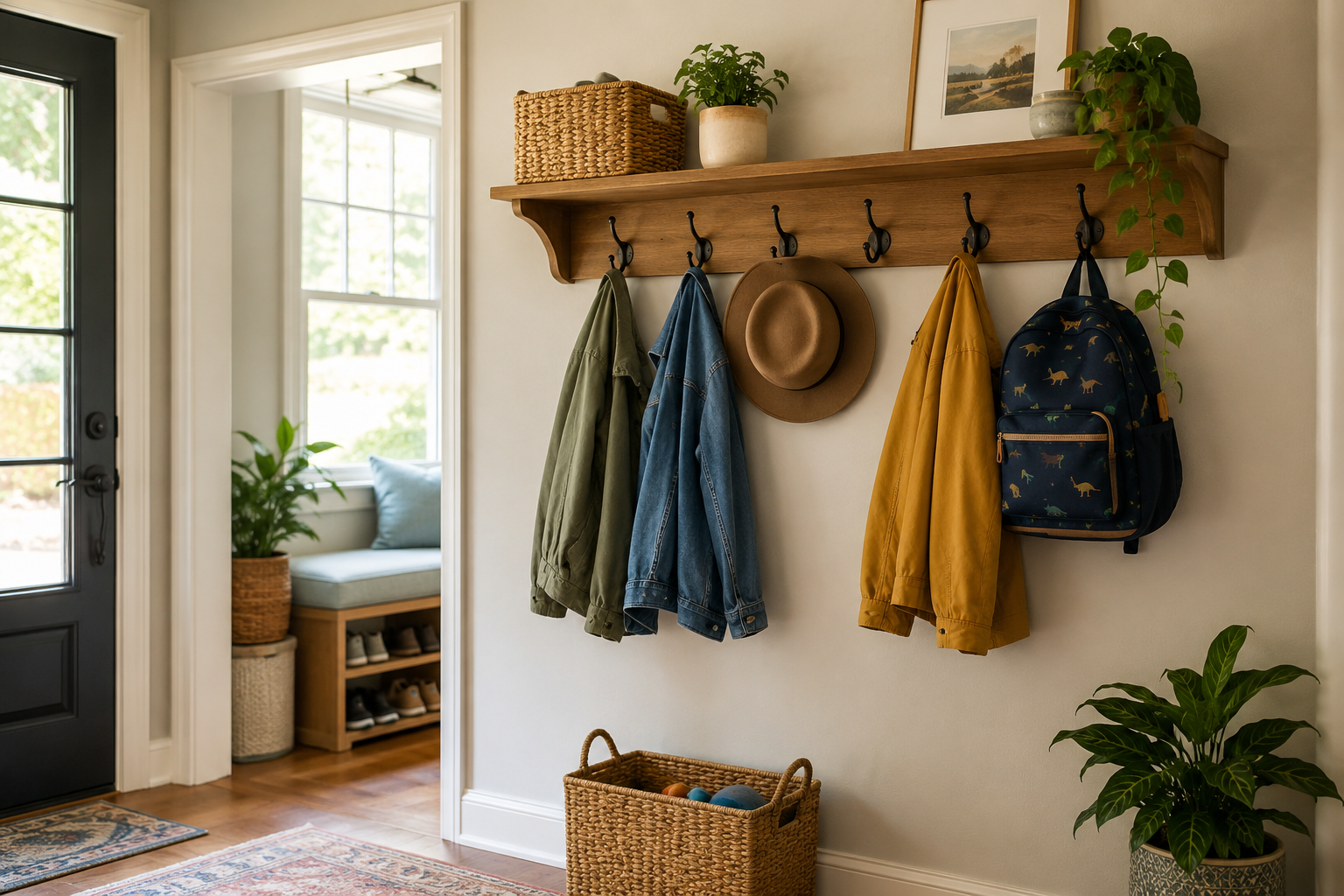
When floor space is limited, the wall becomes one of the most useful storage areas. A wall-mounted rack with hooks can hold jackets, hats, scarves, reusable shopping bags, and backpacks.
A shelf above the hooks adds room for a small basket, seasonal accessories, or decorative items. Keep heavier items on the strongest hooks and place frequently used bags where they are easy to reach.
For a more organized family system, assign one or two hooks to each person.
4. Create One Place for Keys and Incoming Mail
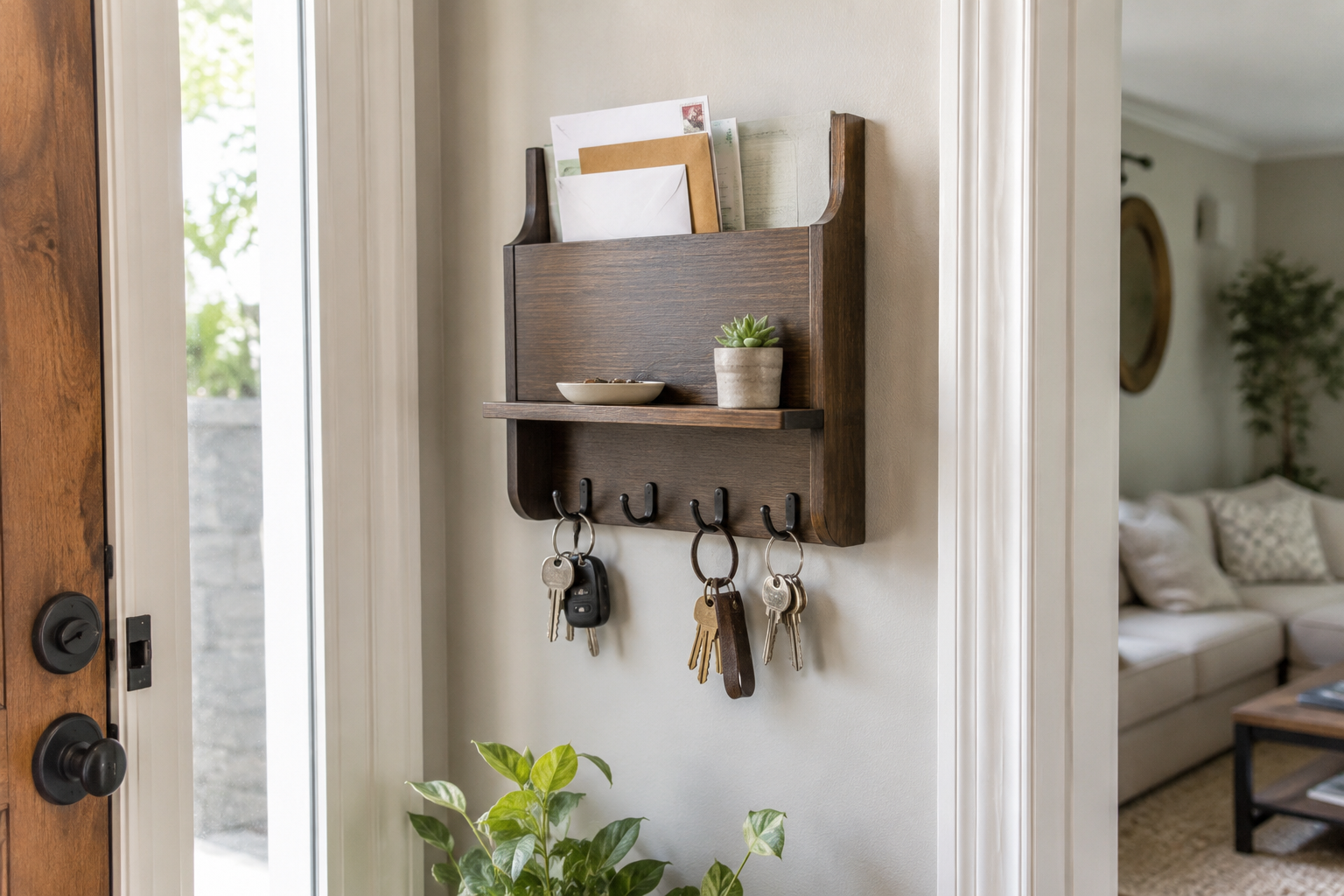
Keys, letters, receipts, and appointment cards often end up scattered across tables and countertops. A wall-mounted key and mail organizer creates a clear home for these small but important items.
Place it close to the front door so family members can use it as soon as they enter. Use the hooks for keys and the upper compartment for mail that still needs attention.
Try to avoid storing old papers in the organizer. Empty it regularly so it remains useful instead of becoming an overflowing paper pile.
5. Keep Umbrellas Contained in a Narrow Stand
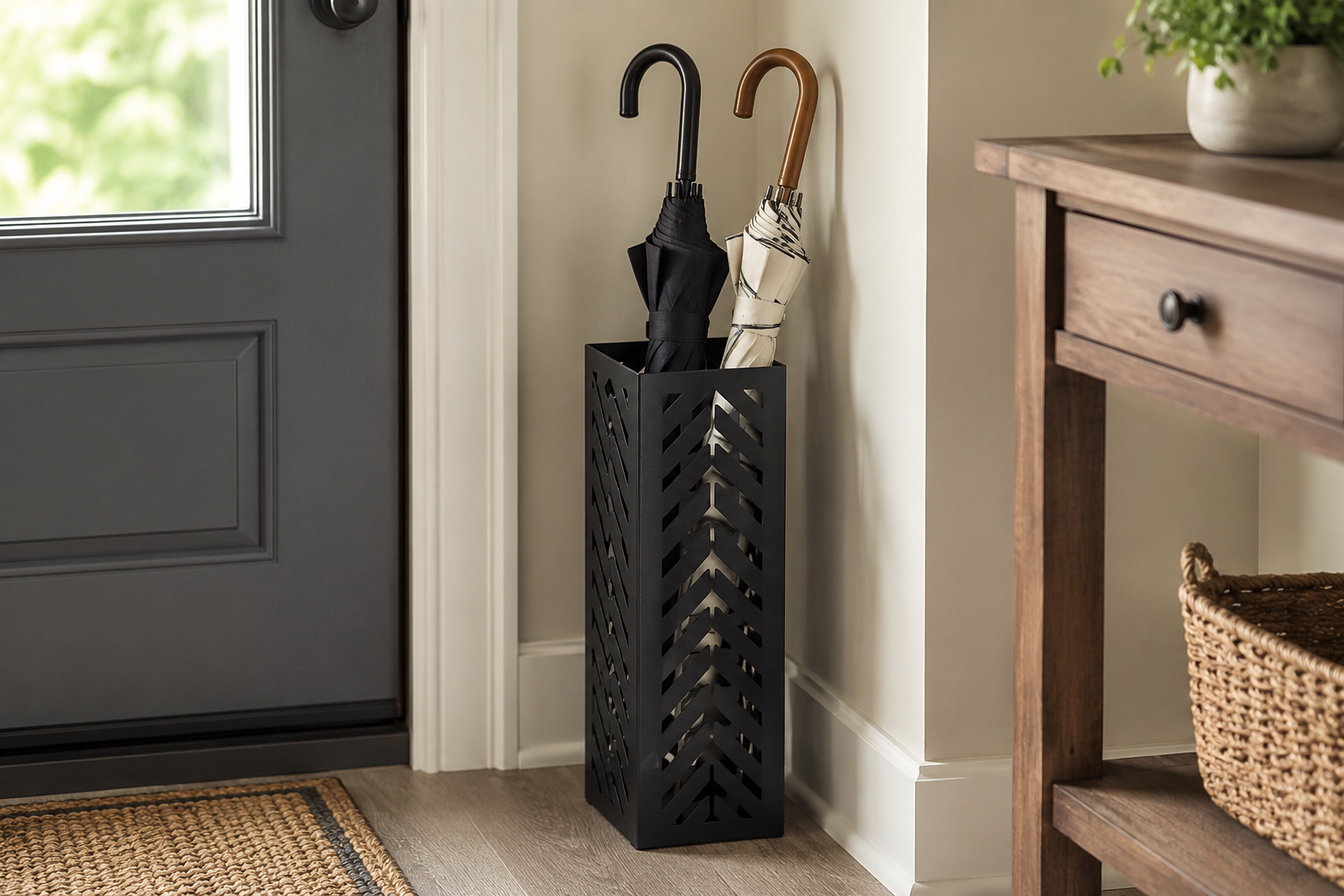
Umbrellas can create visual clutter when they are leaned against a wall or left on the floor. A compact umbrella stand keeps them upright and contained without taking up much room.
A narrow metal design is a practical choice for a small entryway. Place it beside the front door so wet umbrellas do not need to be carried through the house.
Choose a stand with a removable drip tray when possible, especially if your family uses umbrellas often.
6. Use a Catchall Tray for Daily Essentials
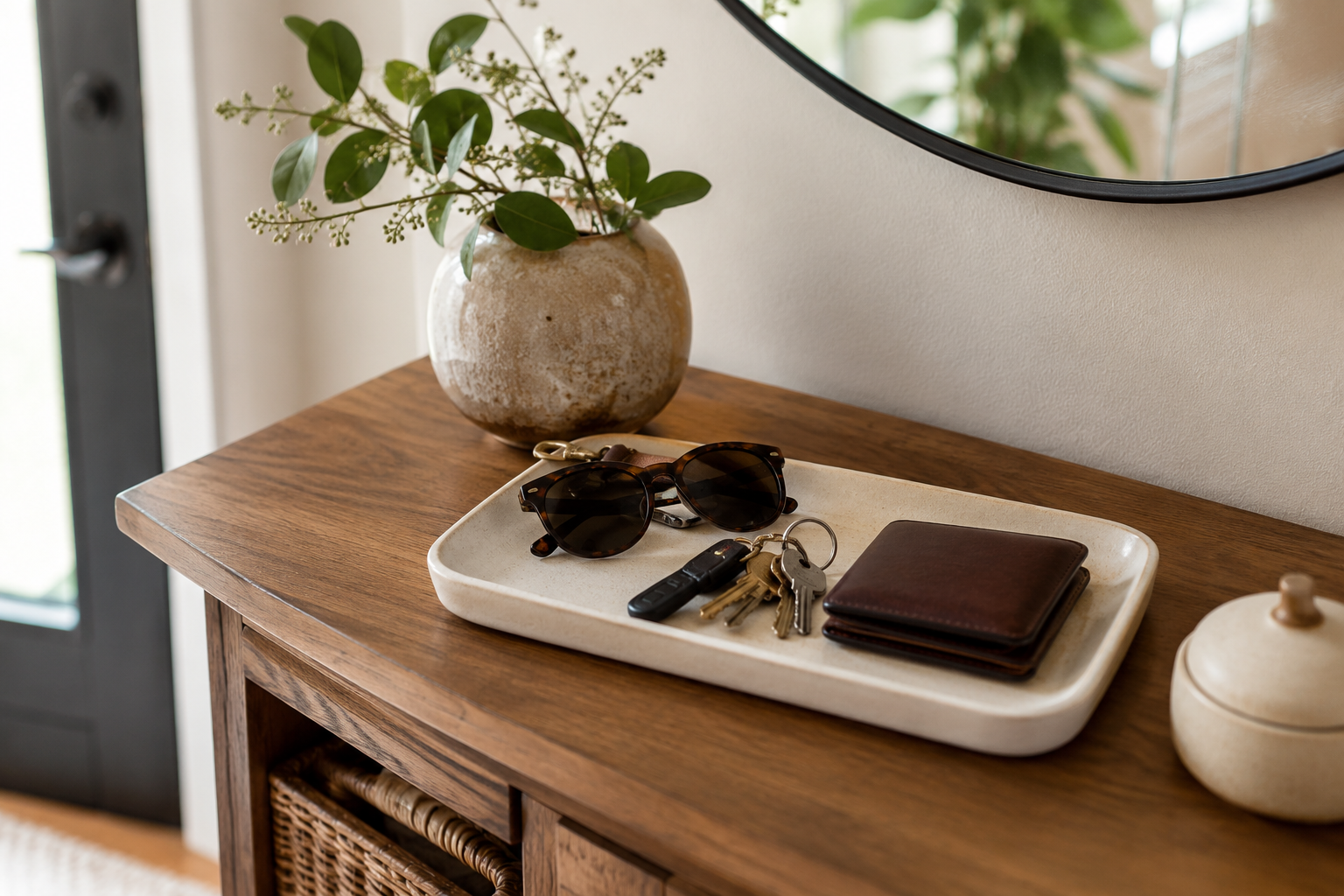
A catchall tray is a simple way to keep small everyday items from spreading across the entryway. Use it for keys, wallets, sunglasses, earbuds, or other things that need to leave the house with you.
Place the tray on top of a shoe cabinet or narrow console table. A light ceramic, wood, or leather-style tray can add texture while keeping the surface visually organized.
The tray should hold only the essentials. If it begins to overflow, remove anything that does not need to stay near the door.
7. Hide Loose Accessories Inside a Woven Basket
A woven basket is useful for items that are difficult to organize on hooks or shelves. It can hold slippers, hats, scarves, reusable bags, pet supplies, or seasonal accessories.
Place the basket under a bench, beside a shoe cabinet, or in an unused corner. The woven texture helps the entryway feel warm and homey while concealing the contents.
For a busy family, one large basket is often easier to maintain than several small containers.
How to Organize a Small Entryway Without a Closet
An entryway without a closet can still be organized by combining vertical storage, concealed shoe storage, and one flexible basket.
Start with the items your family uses most often. Keep everyday shoes near the floor, coats and bags on wall hooks, and small essentials at hand level. Seasonal or rarely used items should be stored somewhere else whenever possible.
Try not to make the entryway responsible for holding everything. Limiting the space to current, frequently used items will help it stay manageable.
How to Create an Entryway Drop Zone for the Whole Family
A family drop zone works best when each type of item has one obvious place. Shoes go in the cabinet or bench, bags go on hooks, keys go in the wall organizer, and small essentials go in the tray.
Make the system easy enough for everyone to use. Storage should be visible, reachable, and simple. Complicated systems often look organized at first but are difficult to maintain during busy mornings.
Labels can help younger family members, but a clear and consistent layout is often enough.
Best Colors for a Welcoming Small Entryway
Light neutral colors can make a small entrance feel brighter and more open. Cream, warm white, pale beige, soft gray, and natural wood are easy foundations.
Add small amounts of color through cushions, baskets, rugs, coats, or wall art. Sage green, dusty blue, muted mustard, terracotta, and blush pink work well in a warm family entryway.
Using two or three main colors will keep the space cohesive even when everyday belongings are visible.
How to Keep the Entryway Tidy Every Day
A quick daily reset is easier than a large weekly cleanup. Return shoes to the cabinet, hang bags and coats, empty unnecessary papers, and place loose accessories in the basket.
It also helps to remove items that no longer belong in the entryway. Outgrown shoes, expired coupons, empty bags, and off-season accessories can quietly take over a small space.
A five-minute reset at the end of the day can make the next morning feel much easier.
Final Thoughts
A well-organized entryway does not need to be large or perfectly styled. The most useful spaces are designed around real family routines.
By adding a slim shoe cabinet, storage bench, wall hooks, key organizer, umbrella stand, catchall tray, and woven basket, you can create a welcoming entrance that is easier to maintain.
Choose the ideas that solve your biggest clutter problems first, then build the rest of the space gradually.