This post may contain affiliate links. As an Amazon Associate, I may earn from qualifying purchases.
The photos in this post are styled inspiration images. The exact products linked below may look different, but they can help you create a similar cute and organized kids room.
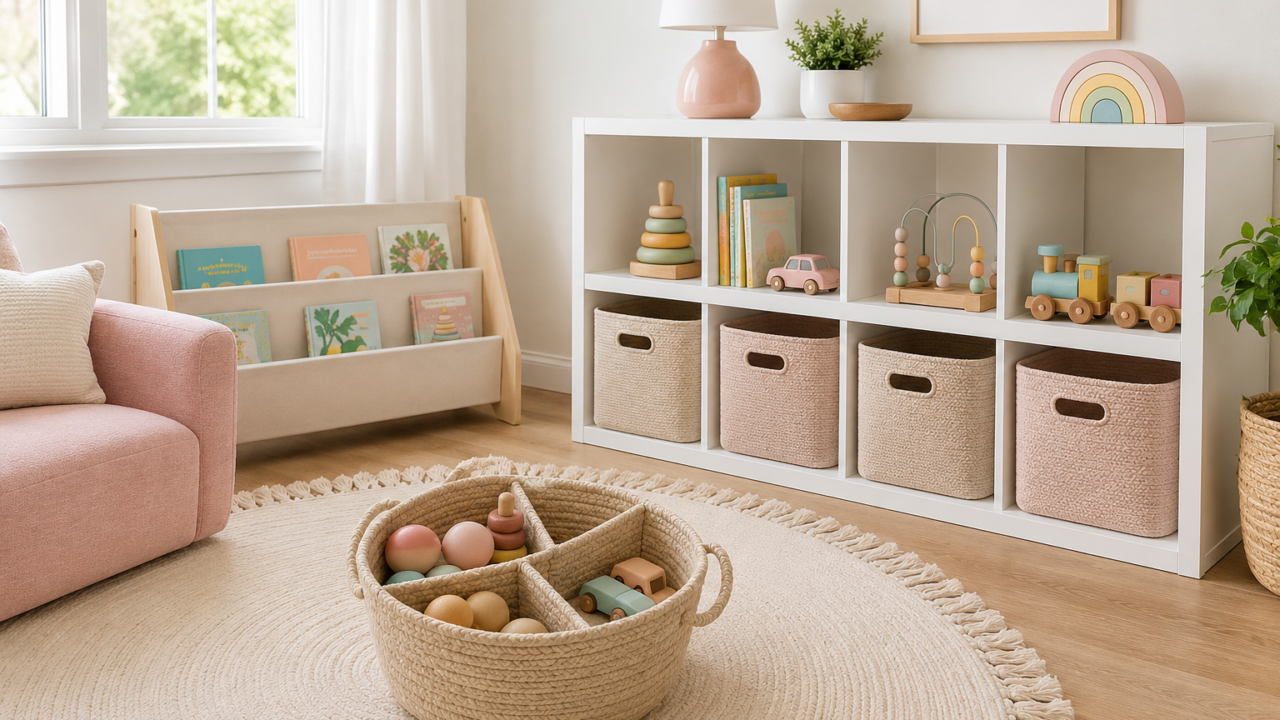
A small kids room can feel cluttered surprisingly quickly. Books, balls, toy cars, puzzles, and activity supplies often end up spread across the floor, even when the room does not contain that many toys.
The good news is that you do not need a large playroom or expensive custom storage to create a space that feels organized. A few child-friendly baskets, low shelves, and simple storage zones can make toys easier to find, easier to put away, and much less overwhelming.
These cute toy storage ideas are designed for small kids rooms where every bit of floor and wall space matters. The goal is not to hide every toy. It is to create a simple system that children can understand and parents can maintain.
1. Use a Divided Basket for Everyday Toys
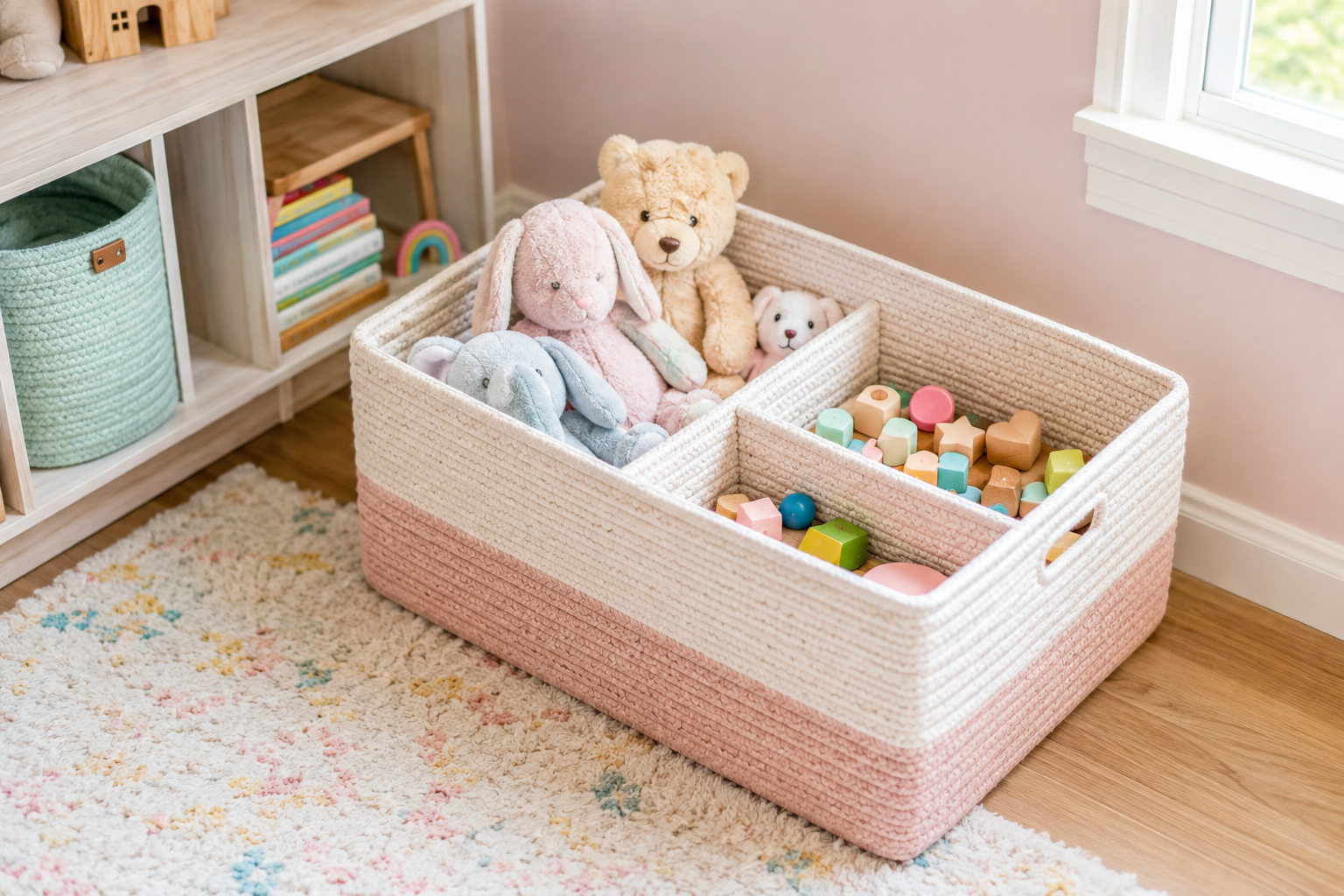
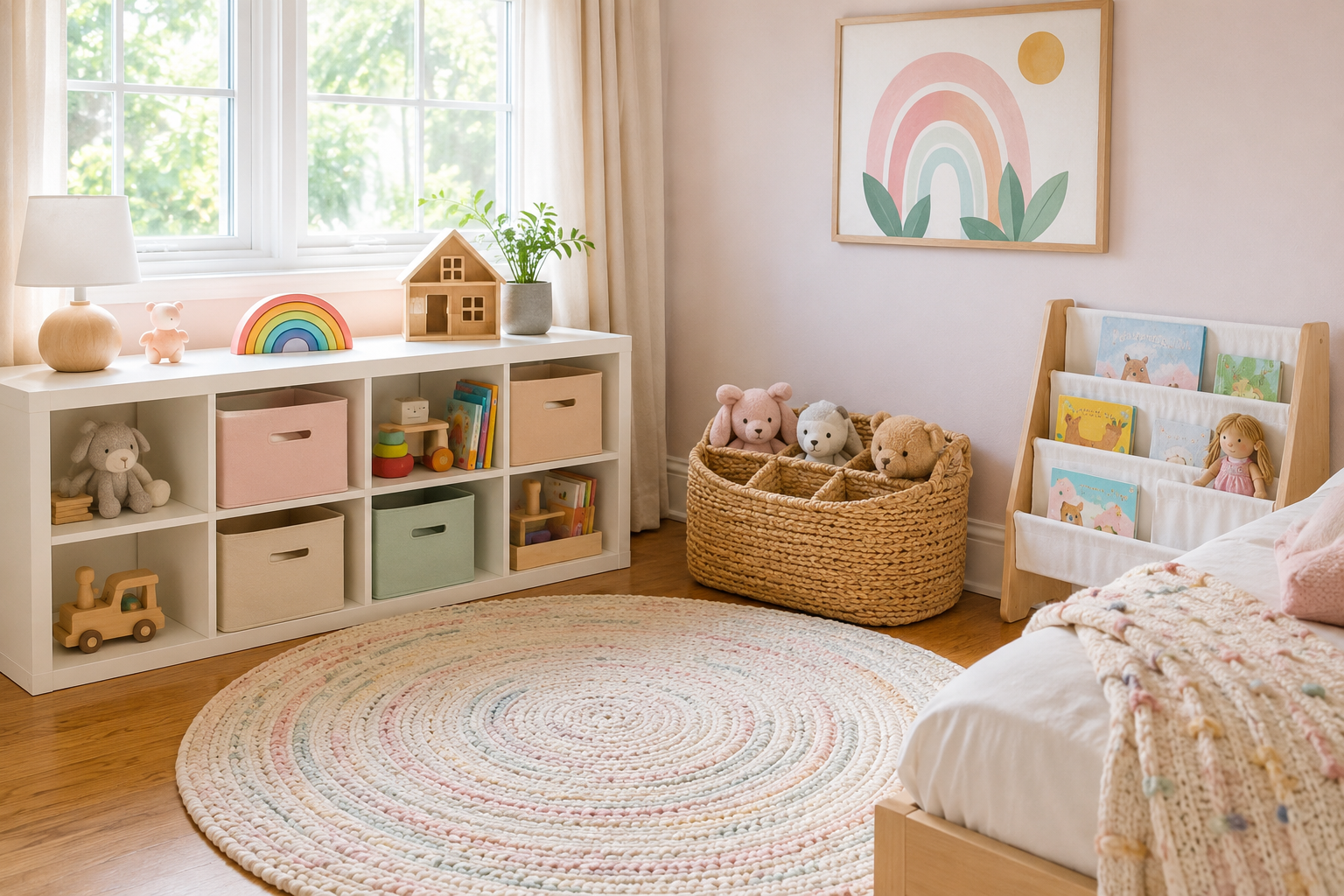
A divided basket is helpful when several small toy categories are used every day. Instead of placing everything together in one large container, use each section for a different type of toy.
One compartment can hold small balls, another can hold toy cars, and another can hold stacking rings or simple activity toys. This makes it easier for children to see where each item belongs.
Choose lightweight toys for an open floor basket and avoid filling it completely. A little empty space makes the basket easier to use and prevents toys from spilling onto the floor whenever one item is removed.
2. Choose Low Storage Kids Can Reach
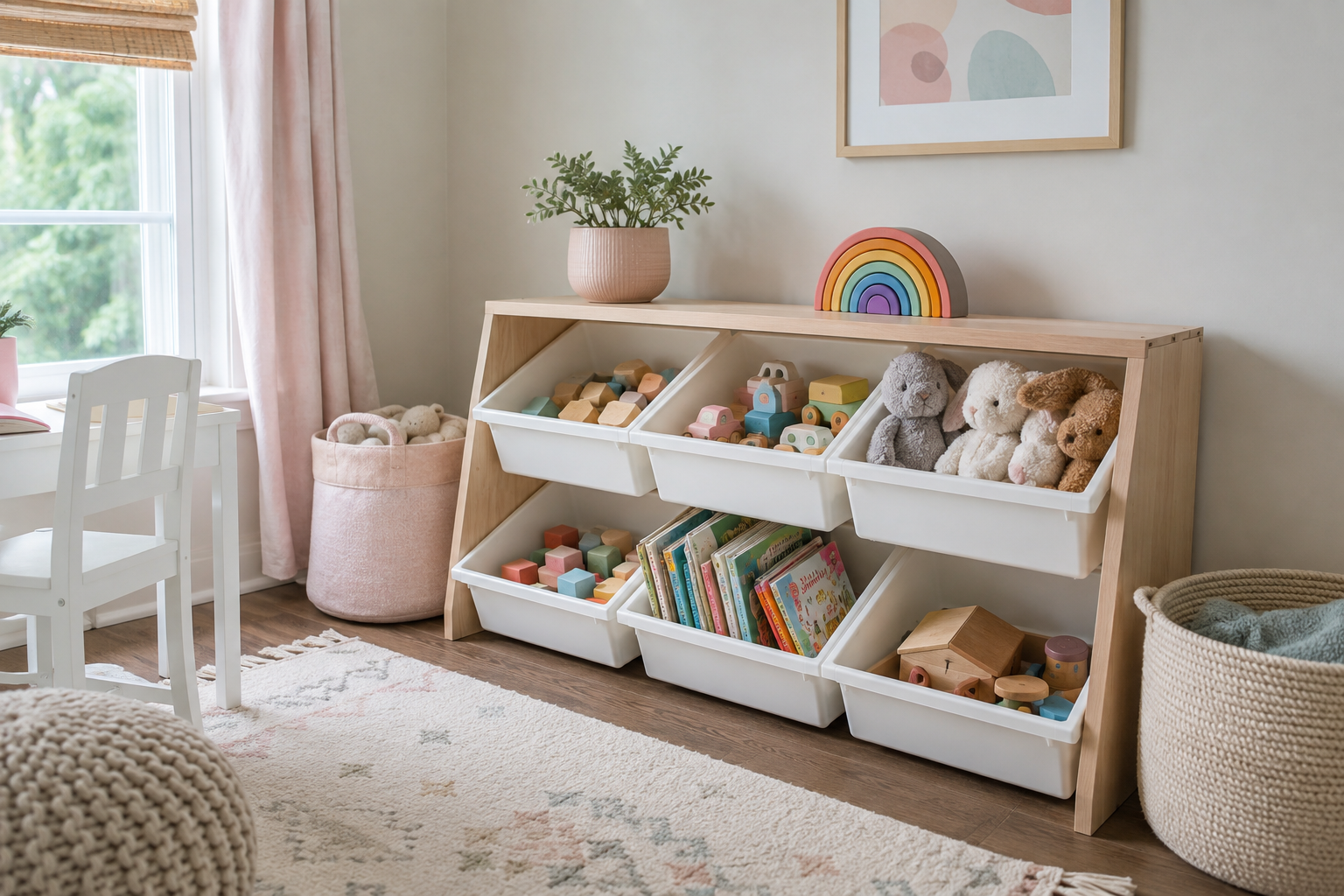
Low storage is one of the most practical choices for a young child’s room. When bins are placed at a comfortable height, children can choose their own toys and begin learning how to put them away.
Use the easiest-to-reach bins for toys that are played with most often. Balls, vehicles, puzzles, and simple activity sets work well in open bins because children can quickly see what is inside.
Less frequently used items can go in the lower or outer sections. Keeping each bin limited to one general category will make the system easier to understand.
3. Add a Front-Facing Shelf for Books and Quiet Activities
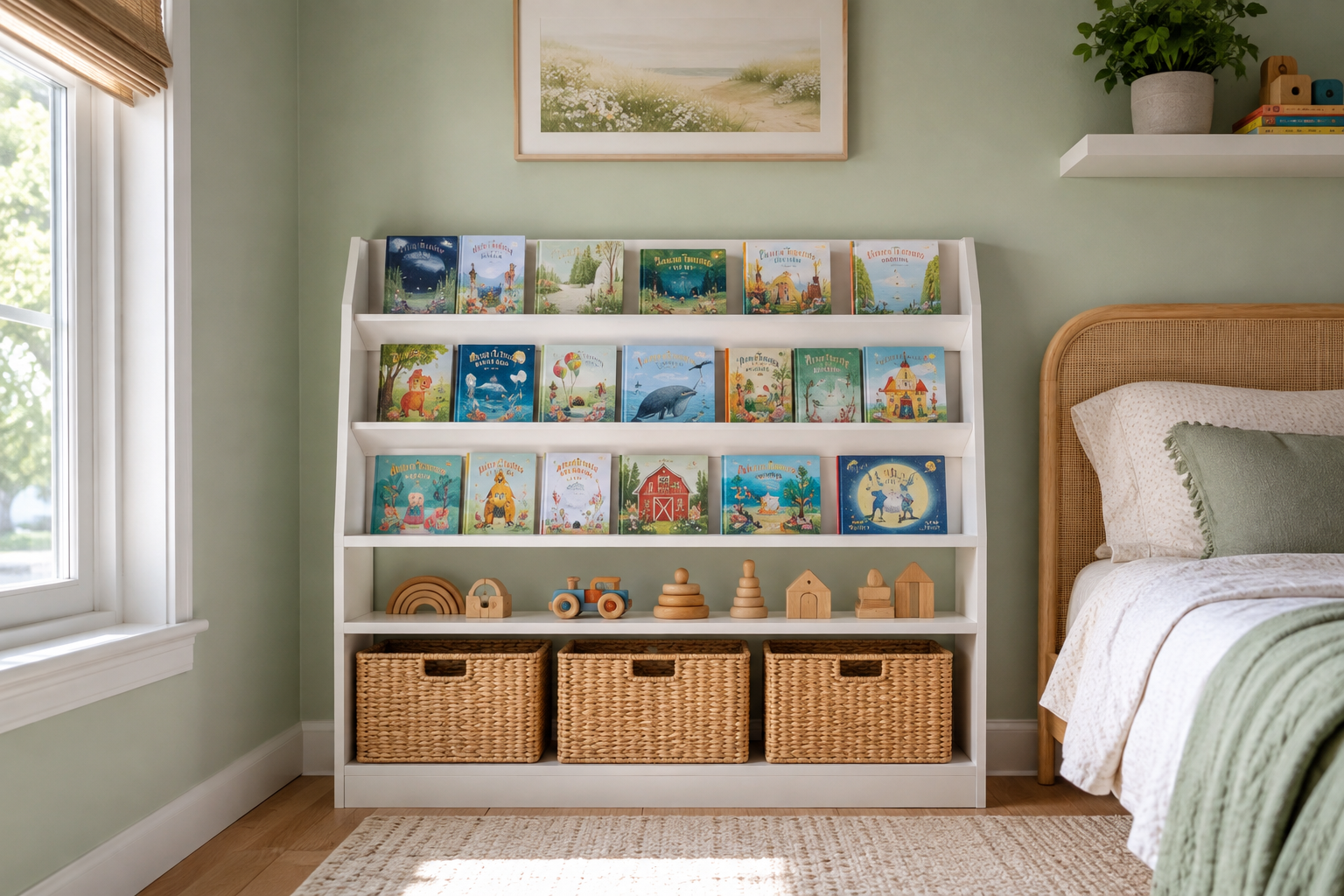
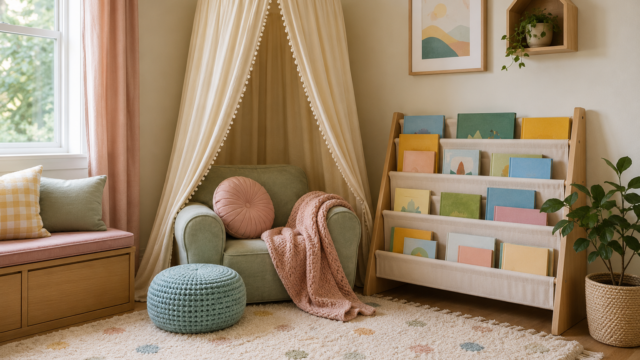
A front-facing bookshelf allows children to recognize books by their covers instead of searching through tightly packed book spines. It can also make a small reading area feel more inviting.
Keep the number of displayed books manageable. Rotating a smaller selection every few weeks can make old books feel interesting again while preventing the shelf from looking crowded.
If the bookshelf includes lower storage, use that area for quiet activities such as puzzles, drawing supplies, flash cards, or simple learning toys. This creates one clear zone for books and calm play.
4. Sort Toys with Pastel Storage Baskets
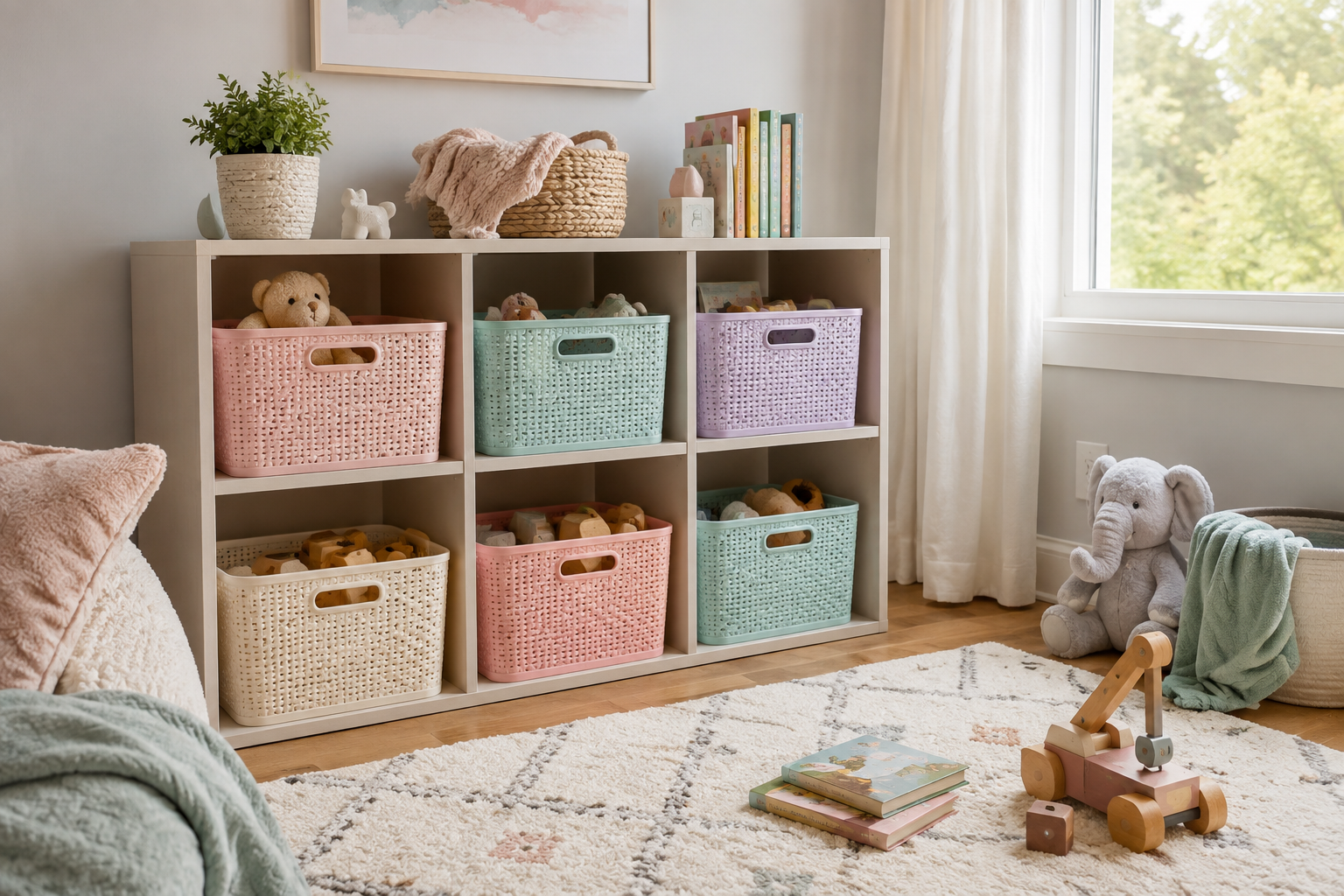
Colorful storage can make a kids room feel cheerful without making it look visually chaotic. Soft pink, sage green, pale blue, cream, and lavender are easy to combine with light wood and white furniture.
Use one basket for each broad toy category. For example, you might create separate baskets for vehicles, balls, puzzles, art supplies, and building toys.
Try not to create too many categories. A young child is more likely to follow a simple five-basket system than a detailed system with fifteen different containers.
5. Hide Visual Clutter in Foldable Storage Cubes
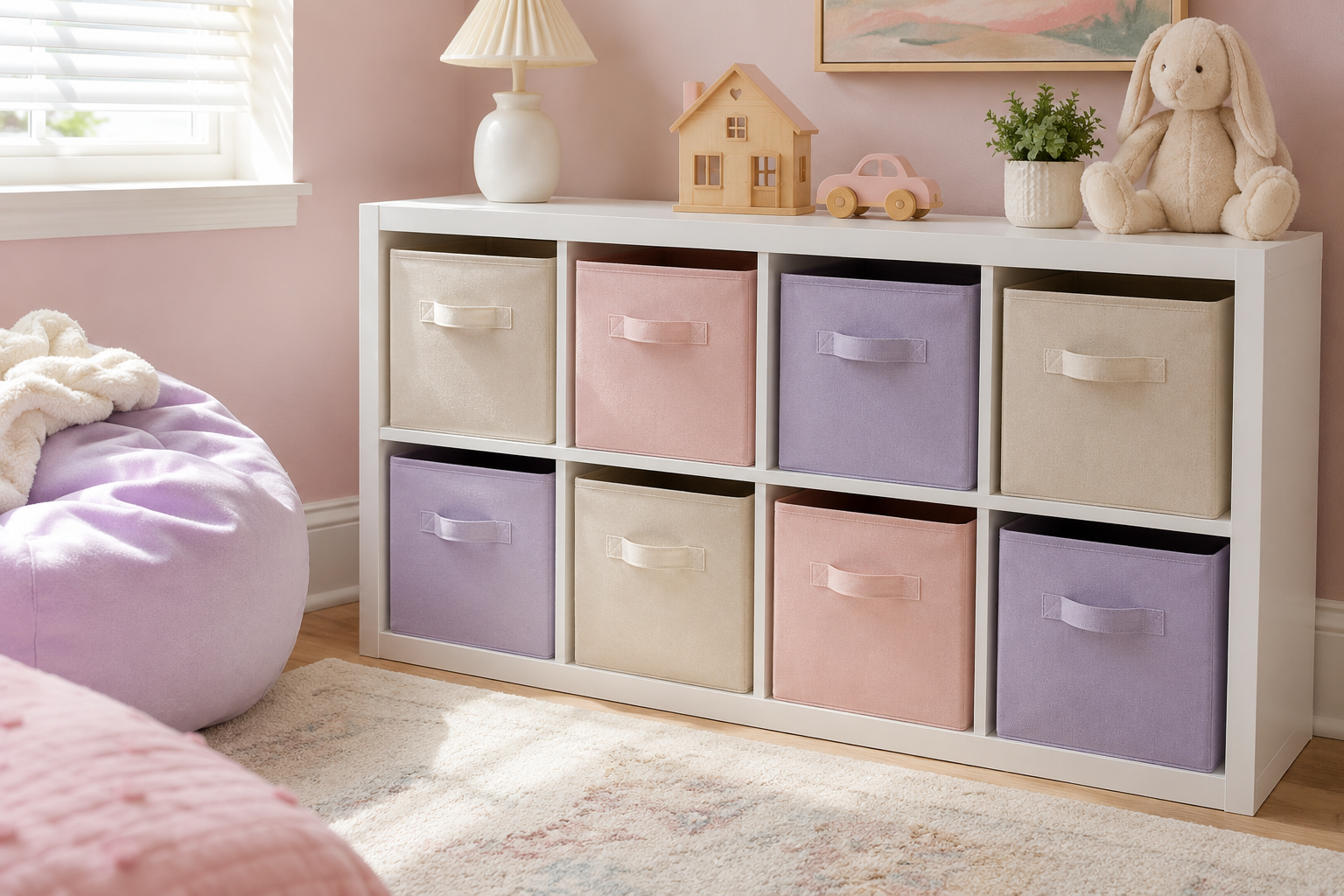
Open toy storage is convenient, but seeing every toy at once can make a small room feel busy. Foldable fabric cubes are useful for hiding toys with lots of small pieces or bright colors.
Use closed cubes for items that do not need to remain visible, such as craft supplies, magnetic tiles, dress-up accessories, or toys that are only used occasionally.
For a calm look, repeat two or three colors instead of using a completely different color for every cube. Matching handles and similar materials will also help the storage wall feel more intentional.
6. Use Wall Shelves for Favorite Toys and Books
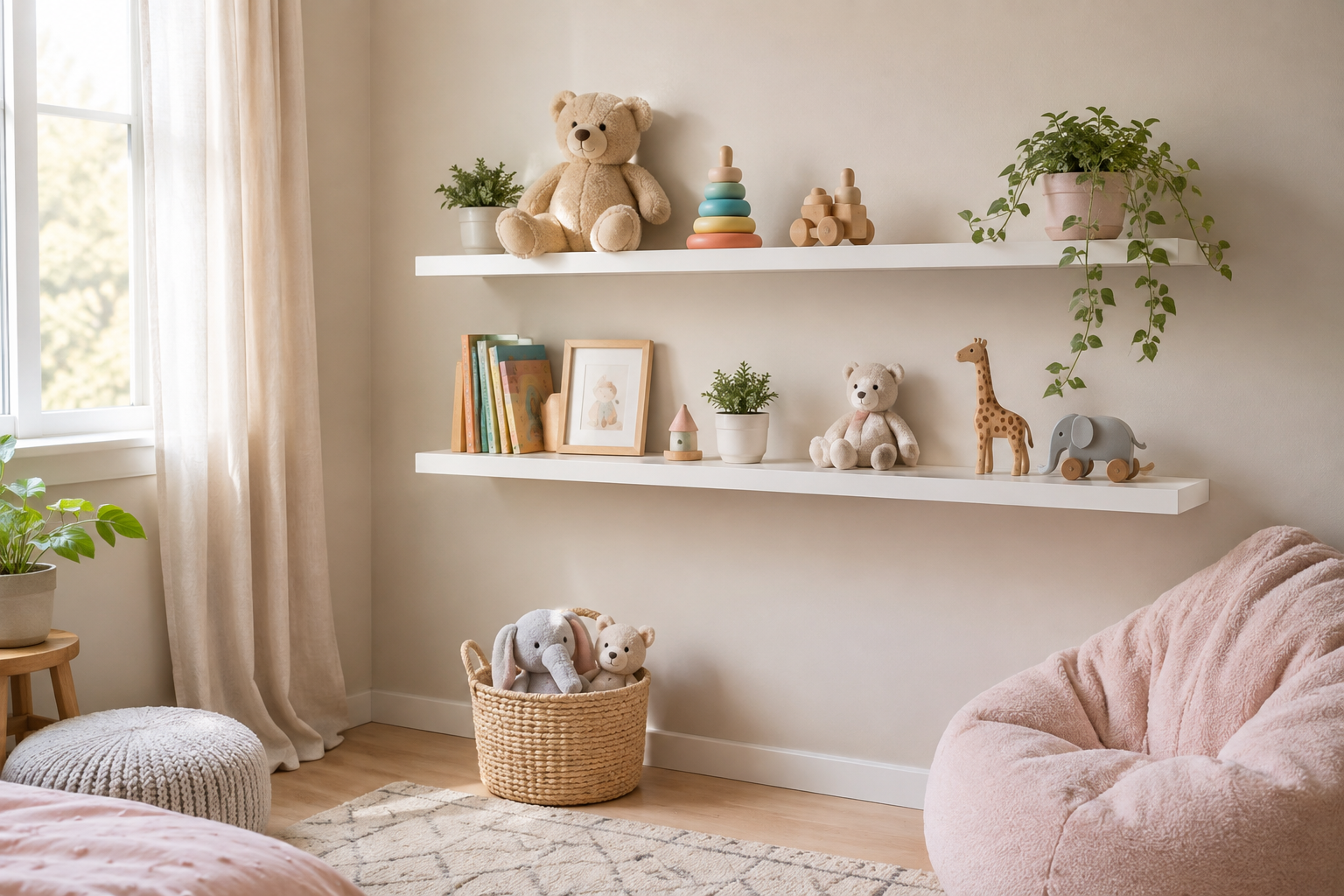
Wall shelves help you use vertical space without taking up more floor area. They work especially well in narrow rooms where adding another cabinet would make the space feel crowded.
Use wall shelves for a small number of favorite books, simple wooden toys, framed art, or decorative objects. Avoid placing heavy toys or frequently used items on a high shelf.
Keep the arrangement simple and leave visible space between objects. A shelf does not need to be completely filled to be useful or attractive.
7. Create a Defined Play Zone with a Soft Rug
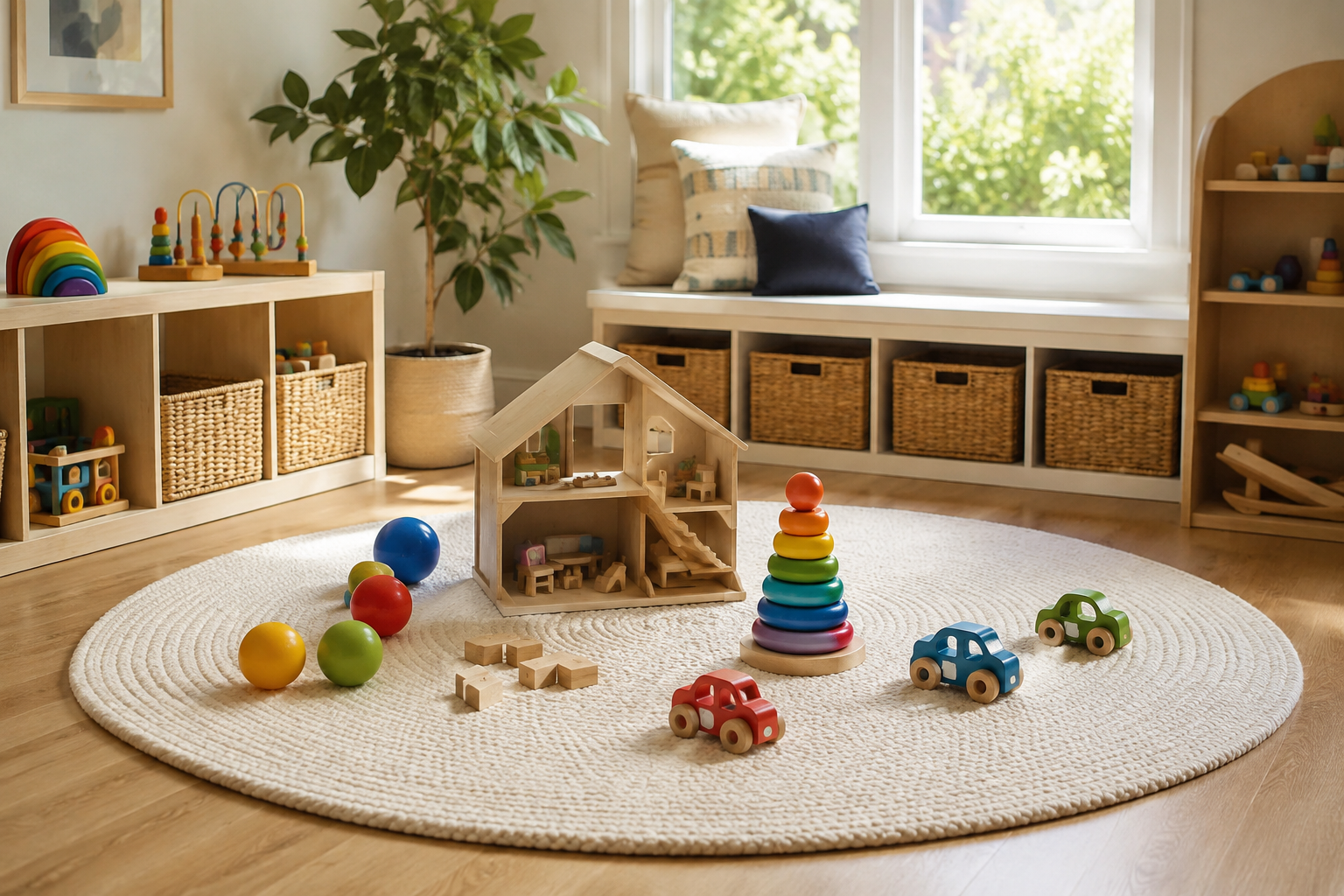
A rug can visually separate the play area from the sleeping, reading, or storage areas of a small bedroom. It gives children a clear place to bring toys and can help stop play from spreading across the entire room.
Choose a rug that leaves enough visible flooring around the edges. An oversized rug may make a very small room feel tighter, while a medium round or rectangular rug can define the space without overwhelming it.
Keep only a few toys on the rug at one time. The remaining toys can stay in nearby baskets until the child is ready to switch activities.
How to Organize Toys by Category
The best toy categories are broad, easy to recognize, and suitable for your child’s age. Complicated categories may look organized at first, but they are often difficult to maintain.
A simple system might include:
- Balls and active toys
- Cars and vehicles
- Puzzles and learning activities
- Books
- Art and craft supplies
- Building and stacking toys
- Occasional or rotating toys
It is fine if some toys could fit into more than one category. Choose the location that feels most natural and keep using it consistently.
How to Help Kids Put Toys Away
Children are more likely to participate in cleanup when the storage system is simple and physically accessible. Large, open baskets are usually easier for young children than small containers with complicated lids.
Start by asking your child to put away one category at a time. For example, collect all the balls first, then the cars, and then the books. A specific request is often easier to follow than simply saying, “Clean your room.”
It also helps to avoid filling every basket to the top. When there is no room left inside a container, children may place toys beside it instead.
What to Keep Out and What to Store Away
Not every toy needs to remain available at the same time. Too many choices can make a small room look cluttered and may make it harder for children to focus on one activity.
Keep frequently used and age-appropriate toys within easy reach. Store seasonal toys, complicated activity sets, sentimental items, and toys with many small pieces in a higher or less accessible location.
You can also create a simple toy rotation. Place part of the collection in storage and switch the available toys every few weeks. This reduces visible clutter and can make familiar toys feel new again.
How to Make a Small Kids Room Feel Bigger
Light-colored furniture and baskets can help a small room feel more open, especially when combined with natural wood and a limited pastel palette.
Try to keep the center of the floor as clear as possible. Place storage against the walls, use low furniture under windows when appropriate, and take advantage of safe wall-mounted storage.
Repeating the same materials also creates a calmer appearance. For example, use several woven baskets rather than mixing many unrelated container styles throughout the room.
Keep the System Simple
A toy storage system does not need to be perfect. It only needs to make daily life easier.
Start with a few clear categories, give every frequently used toy an easy-to-reach home, and leave enough empty space for the system to continue working as toys move in and out of the room.
With low storage, practical baskets, a child-friendly bookshelf, and a defined play area, even a small kids room can feel cute, calm, and much easier to clean.